How PCOS may cause infertility
Polycystic ovary syndrome (PCOS) is a common endocrine disorder that affects more than 1 in 10 women of reproductive age. It is characterized by a hormonal imbalance that can lead to irregular or absent menstrual cycles.
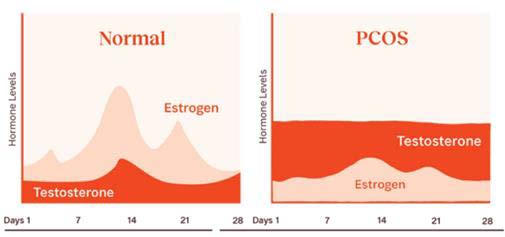
In general, for patients without PCOS, estrogen levels are highest during the follicular phase of the menstrual cycle, which is the time leading up to ovulation. Estrogen levels then decline during the luteal phase, which is the time after ovulation. Testosterone levels, on the other hand, are more constant throughout the menstrual cycle. Women with PCOS typically produce elevated levels of male sex hormones and are unable to produce enough of the female sex hormones needed to ovulate and become pregnant. This can also lead to the development of ovarian cysts, which can cause additional complications and risks in the reproductive system.
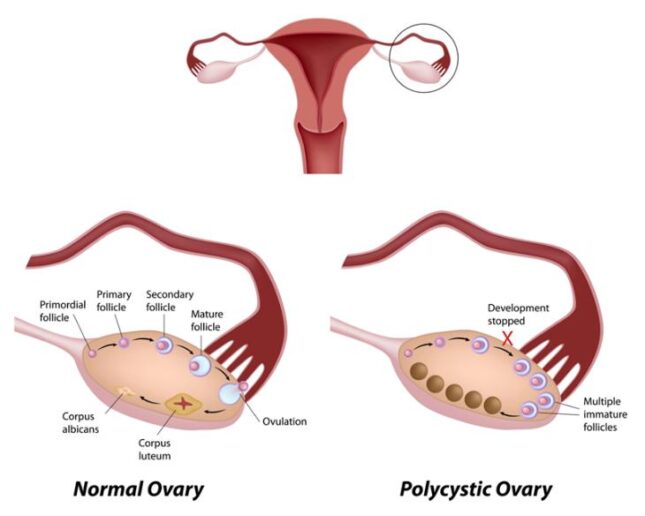
Why the REBALANCE Study
The objective of the REBALANCE Study is to gather data on the safety and effectiveness of the investigational May Health System in a procedure called Ovarian Rebalancing™, intended to restore ovulation in women with infertility due to polycystic ovary syndrome (PCOS). If you have PCOS and have not been able to conceive using first-line medications for ovulation induction, such as letrozole or clomiphene citrate, or are contraindicated for, or have chosen not to take these medications, then you may be eligible to join the REBALANCE study.
The FDA has approved the REBALANCE Study evaluating the investigational May Health System used in the Ovarian Rebalancing procedure.
About the Ovarian Rebalancing procedure
Ovarian Rebalancing is a one-time, hormone-free, in-office procedure which can be done under light anesthesia and should take about an hour. Ovarian Rebalancing uses transvaginal (via the vagina) ultrasound guidance to visualize the ovary. Once the ovary is visualized, a thin needle is inserted through the vaginal wall and into the ovary, similar to the technique we routinely use for egg retrieval for IVF. Radiofrequency energy is then delivered to gently heat the surrounding ovarian tissue. The heat removes some of the ovarian tissue responsible for excess male hormone production.
You may be eligible for the REBALANCE Study if you:
- Are between 18 to 40 years old
- Are experiencing anovulatory infertility due to PCOS
- Have a BMI < 40
- Have had no clinical response to first-line ovulation induction treatment such as letrozole or clomiphene citrate, or are contraindicated for, or decline such treatment
- Are seeking immediate fertility
About the REBALANCE Study
Study participants are randomized into one of two groups: a Treatment group and a Control group. Participants in the Treatment group will undergo the study procedure. Participants in the Control group will receive no treatment for the first 3 months but will have the option to undergo the Ovarian Rebalancing procedure or exit the study after completion of the 3-month follow-up visit .
The study requires a 36-month (3 year) commitment, unless you are a Control group participant who chooses to exit the study at 3 months, and involves routine blood tests, follow-up calls, and office visits.
Not all participants will respond to the Ovarian Rebalancing procedure and having this procedure should not prevent participants from using other fertility options in the future.
We are actively enrolling participants in this study. If you are interested in learning more, please ask to speak to our Research Coordinator.
Visit MayHealth or more information. Or email Christine Kramer (christinekramer@wustl.edu) or call (314) 747-6574 with any questions.